

The luxurious ancient tea that almost went extinct
Considering liu an.

Today’s Leafhopper was commissioned by leaf lover subscribers. For $10 a month, you can vote on monthly story topics and shape the future of Leafhopper’s coverage. Voting for March begins later this week. Upgrade your subscription now to cast your vote while supporting this newsletter!
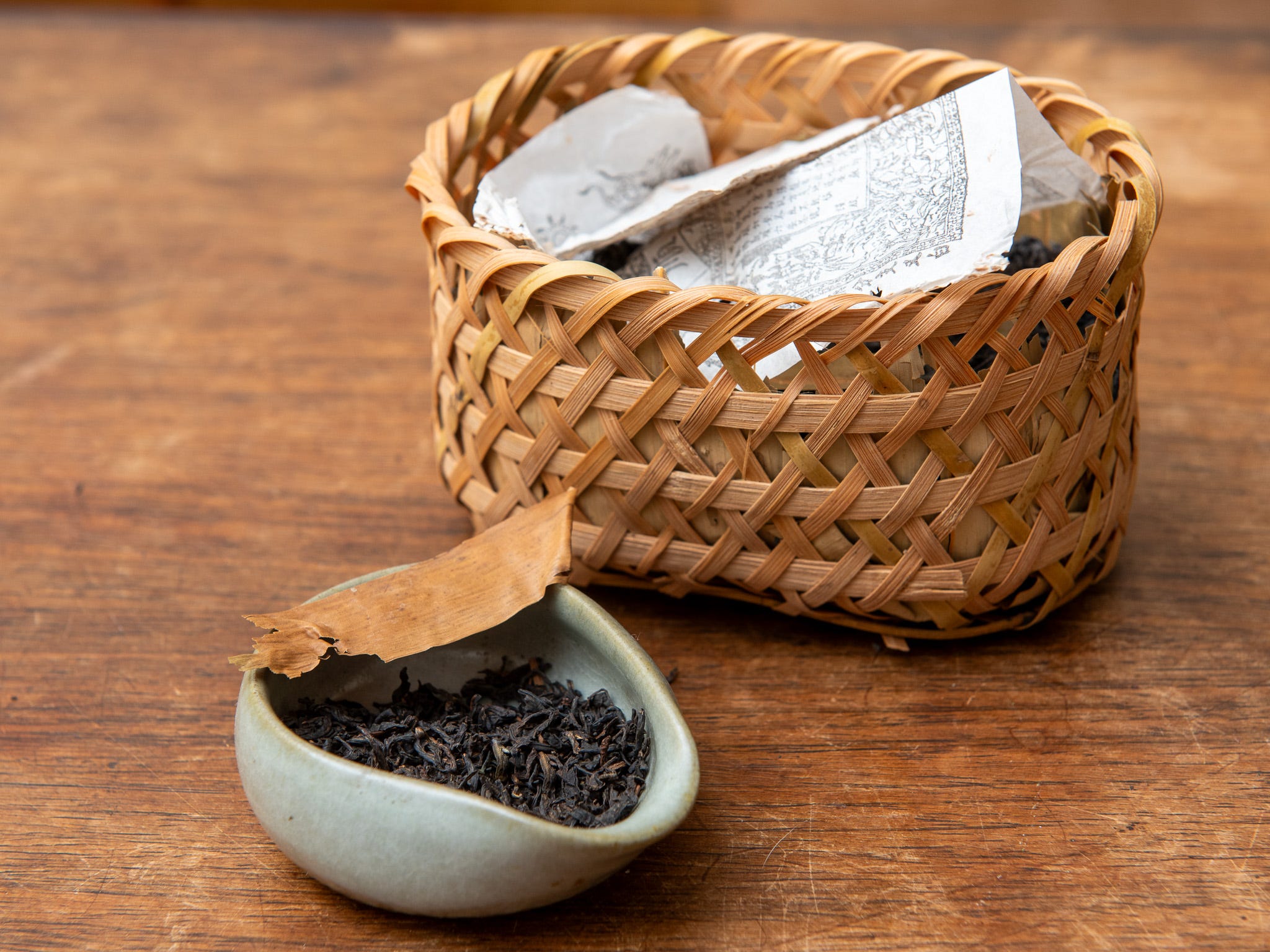
Starter basket
The tea: 2005 Sun Yi Shun liu an, sold by The Chinese Tea Shop. $130.95 for ~450g.
This one’s for the collectors and seekers of strange curiosities. It’s an obscure category of tea, even within China, and despite written records dating back to the end of the Ming Dynasty 400 years ago, there’s little documentation about its history and production, especially in English. Liu an is my favorite heicha (“black” or “dark” tea), a class of microbially fermented teas that are aged for years to deepen their flavors and somatic effects. The leaves are packed into woven bamboo baskets lined with fresh bamboo leaves. They age slowly, only revealing their full potential after several decades. What results is a uniquely smooth and luxurious brew with a sweet, cooling aftertaste. Where puer is bold and robust, liu an is velvety and sophisticated. It was a treat for the wealthy in old Hong Kong, and once you try a well aged sample, you’ll see why.
Liu an can be something of an acquired taste. Young versions have strong olive and pumpkin seed flavors with a burnt rubber abruptness that takes a while to settle down. This 21-year-old basket will benefit from further aging, but it’s past that rough young stage and is ready to reward you with bamboo and ginseng notes and liu an’s signature silkiness. I consider it a good starter basket: relatively affordable, delicious to drink, and full of potential that may send you deeper down the liu an rabbit hole. You can get samples as small as 50 grams to test the waters before committing to a full basket.
The source: Daniel Lui grew up in Hong Kong and drank aged tea at dim sum almost every week. He opened The Chinese Tea Shop in Vancouver in 2002 and stocked his shelves with Hong Kong favorites that could age well, with the rationale that if he struggled to get customers at first, at least he’d have a good collection of tea to drink and sell in the future. But business took off with Vancouver’s Chinese immigrant community. Older customers became teachers and sources of rare aged teas from their personal collections, which is how Lui acquired some liu an baskets dating back to the 1960s. This 2005 basket was made by the Sun Yi Shun factory, which is the largest brand in the tea’s historic home of Qimen county in Anhui.
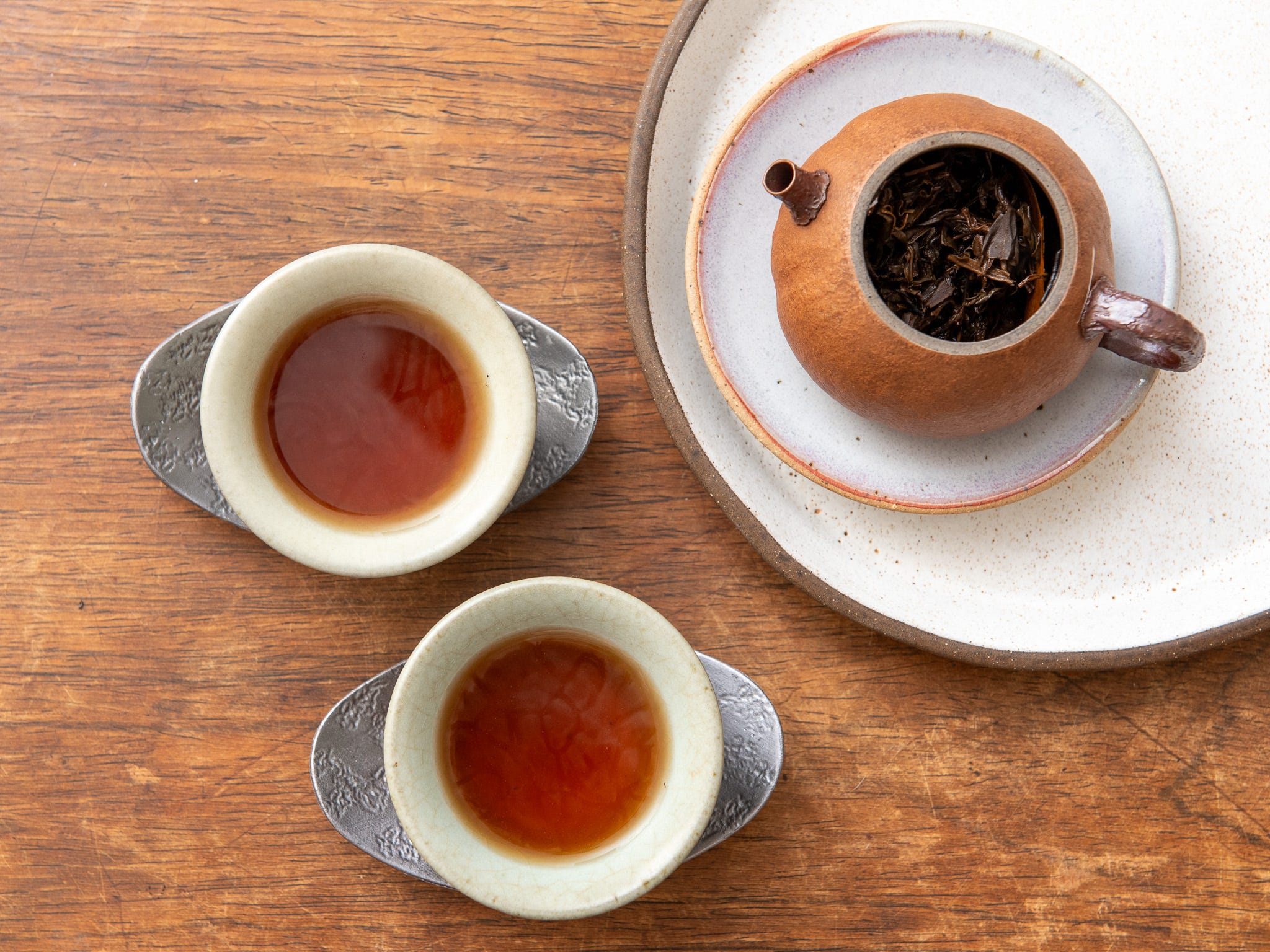
To brew: Hot, hot water is important wake the tea from its long slumber and fully hydrate any compressed pockets of leaf. Pry 7 grams out of the basket for a 100 milliliter pot (1g/~14ml) and, if you want to follow tradition, tear off a piece of the inner bamboo wrapping to brew as well. After a 5-second rinse, steep for 15 seconds to draw out the tea’s rich texture. You can lengthen the steeps after four or five pots. The strong savory note common to young liu an gives way to an immediate sweetness. I get almond aromas and a broad spectrum of medicinal and herbal flavors. The brew makes my mouth water and sits comfortably in my belly. It’s calming and refreshing—good for a nervous system reset after a stressful day. You will get many pots out of this tea and I encourage you to steep it out. The drug works best if you take it slow, which is one of the functional goals of drinking a well aged tea.
Upgrade to a leaf lover subscription to vote on future Leafhopper stories.
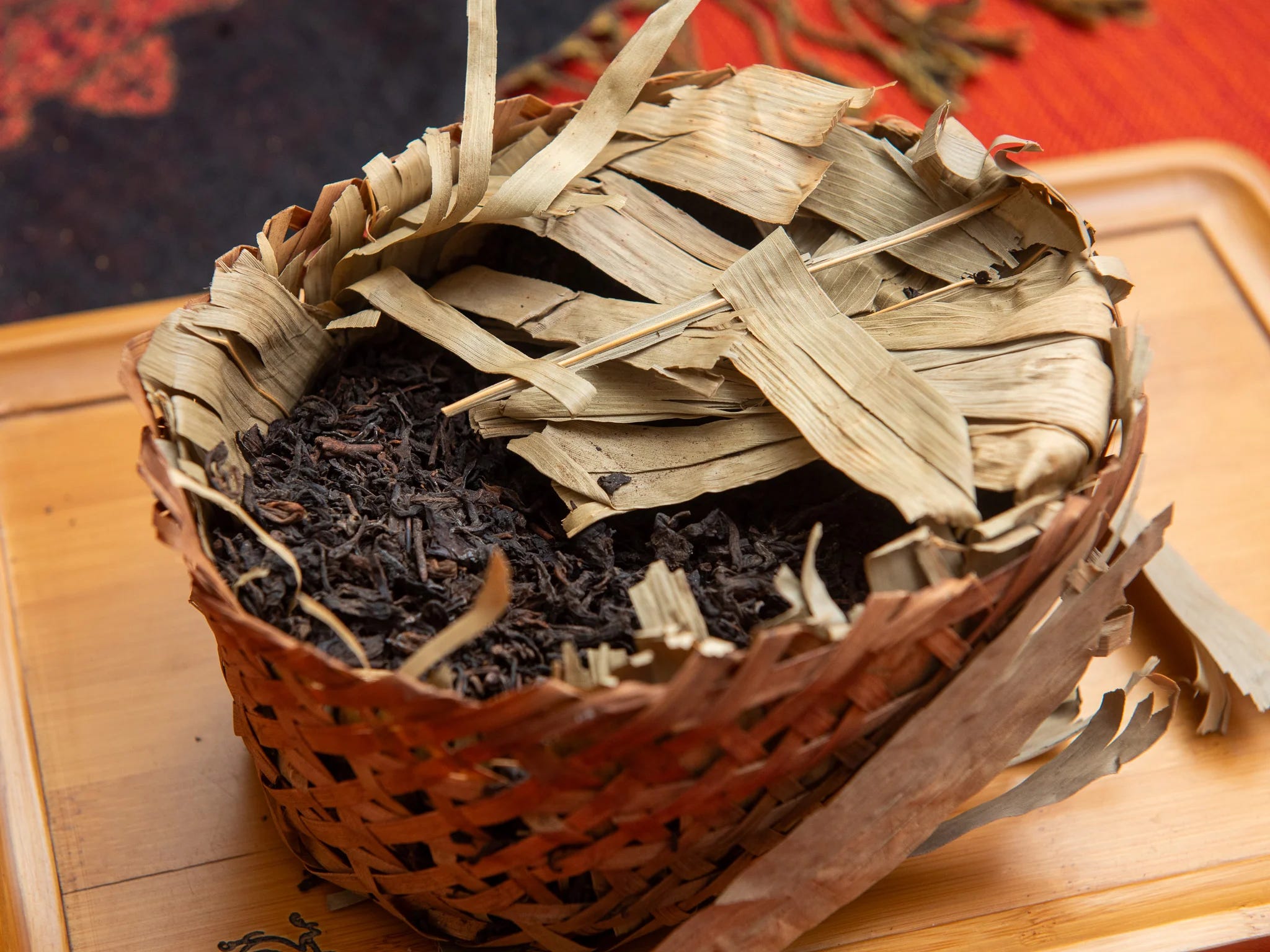
Liu an: inside the basket
Even by specialty tea standards, making liu an is a big deal. Here’s a condensed version of the process. Liu an material is picked during a narrow window in spring when it’s reached the right level of maturity. The most prized versions are made with just the tiny buds and top few leaves. The harvest is spread out to wither and lose moisture, then cooked to halt most (though not all) enzymatic activity. Traditionally this is done by hand in a large wok, which gets toasty on the fingers. The hot leaves are rolled to bruise cell walls and draw out oils from within. Then they’re baked over wood or charcoal until dried. At this point you have a crude greenish tea that’s packed up to cure for several months.
Come autumn, the dried leaves are baked again, sorted into different leaf grades, and re-blended to the needs of the manufacturer. At the end of the day the tea is fired once more and spread in a thin layer onto a mat outdoors. The tea sits overnight, gently soaking up drops of “white dew” formed when moisture in the air condenses at cooler nighttime temperatures. This step is unique to liu an production and essential to its flavor. The next day the tea is steamed to become pliable and packed into woven bamboo fiber baskets lined with green bamboo leaves. The steamed tea gently cooks the bamboo, suffusing its aroma into the leaves. The baskets are baked in frames one more time to set the tea, then they’re woven together into flats for storage and shipping. Liu an is traditionally stored at the factory to give the tea time to ferment. It’s usually aged for longer periods either by tea sellers or home drinkers. Finally, after years of coordinated effort and collaboration with nature, the tea is ready to brew.
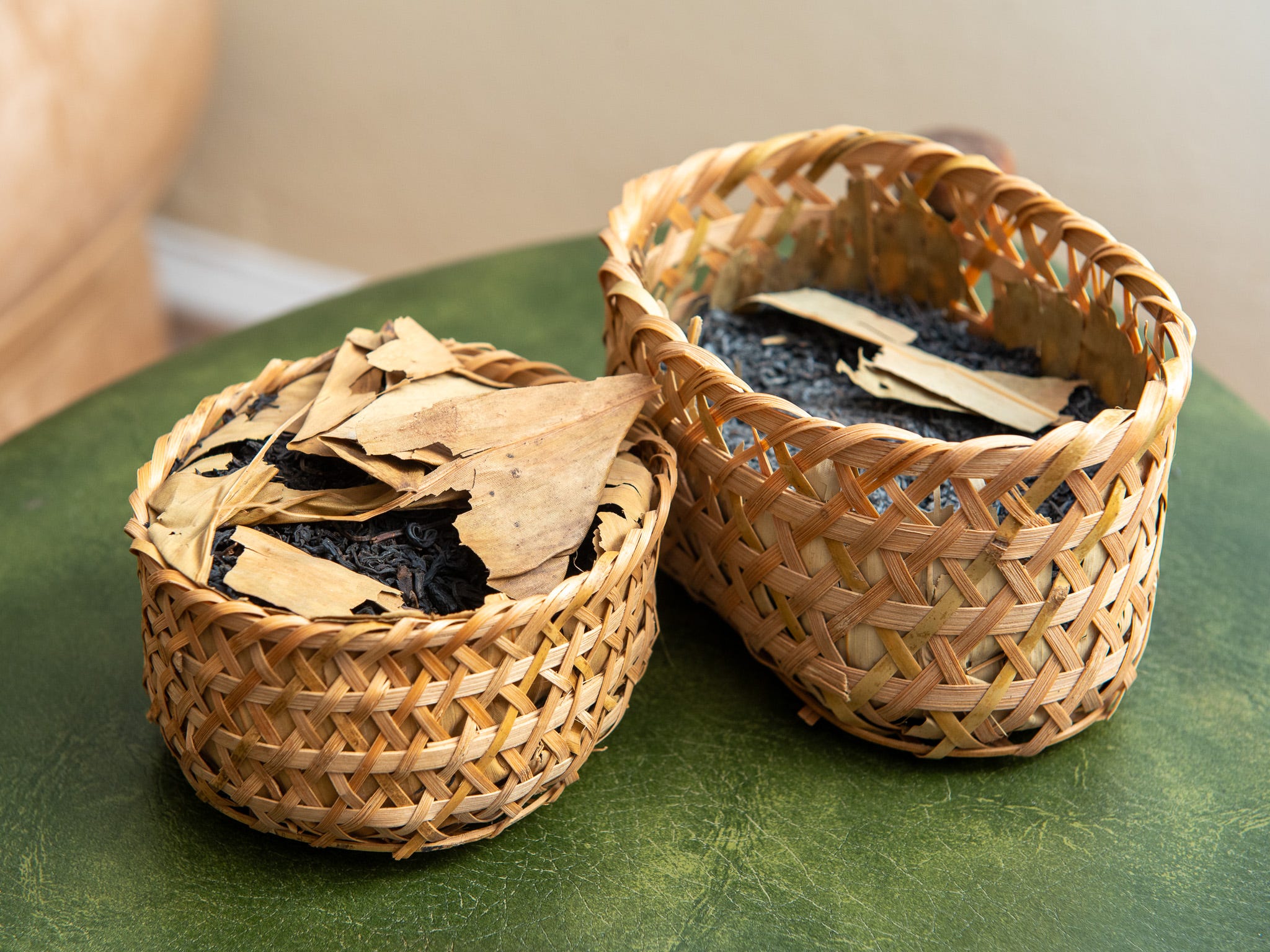
Liu an, more accurately romanized as lu an, called luk on by Cantonese drinkers and an cha by enthusiasts, is a complicated tea with a long history. But provided your tea is well made and aged long enough, it doesn’t require a sophisticated palate to appreciate its pleasures. Liu an tastes like old money. It’s easy to drink and challenging to think about. The tea is often described as elegant and refined. It’s also said to have health benefits and has historically been used as an activator or catalyst in Chinese herbal medicine blends. I’m not qualified to accept that claim at face value or consider it a clever bit of marketing, so you can decide for yourself. What I can say is that liu an has captivated me since I first tried it years ago. In reporting this story, I consumed the last of my 1970s stash graciously shared by a tea friend, and I mourn its absence.
Will you also fall under liu an’s spell? Let’s find out.
